

The growth in Germany of Alternative für Deutschland (AfD), the neo-Nazi party linked to Putin’s Russia, is taking on increasingly dangerous and worrying proportions. The recent elections held in the German federal state of Saxony-Anhalt saw the far right reach 44.8 per cent, with voter turnout rising from 60 per cent in 2021 to the current 75 per cent. The anti-fascist mobilisation was as strong as it was insufficient to halt the vote for the AfD, which now finds itself a hair’s breadth away from a majority to govern Saxony-Anhalt, an eastern German state with a population of around two million people. When pre-election polls suggested that the left-wing Die Linke, the Greens and the SPD were at risk of failing to clear the 5 per cent threshold, a campaign was launched to concentrate the anti-fascist vote on these three parties: the mobilisation proved successful and all three parties entered the regional parliament, each winning eight seats, thereby preventing a further breakthrough by the AfD. However, the only party to remain ambiguous regarding the ‘cordon sanitaire’ against the Nazis also cleared the threshold: the Bündnis Sahra Wagenknecht (BSW), a political force born out of a split from Die Linke, holding positions that might be described as ‘red-brown’. With its five seats, it could decide to enable the far right to form a government in Germany for the first time since the death of Adolf Hitler.
This outcome seems truly paradoxical: a party stemming from the left, a remnant of the former DDR and of Stalinism, would provide decisive support – at least at this stage and in this specific state – for the Nazis’ rise to government. In reality, this conclusion should come as no surprise if we consider the key issues shared by the two parties: the populism of the AfD and the BSW is deeply rooted in the former DDR, with its industrial decline, social problems and resentment towards the West – the driving force behind reunification after the fall of the Wall. Both parties, albeit with different tones and nuances, portray migrants as scapegoats for this economic crisis; both side with the Kremlin in the war in Ukraine, under the false and hypocritical slogan of ‘Peace’; and, of course, they are in favour of cutting off all aid – military or humanitarian – to Ukraine.
Let us therefore discuss what these two parties – which are at the centre of the current political controversy in Germany – actually are. Let us begin with the AfD, which enjoys significantly greater support and is undoubtedly the main threat to both Germany and Europe as a whole. The party was founded in 2013 as a Eurosceptic movement, though it was established by liberal economists. As early as the following year, the massive influx into Germany of refugees from Syria – around one million people – led the party to adopt an increasingly aggressive and threatening anti-migrant rhetoric. From then on, the leadership changed; neo-Nazis joined the party, and secret meetings were held to plan the ‘remigration’ of migrants currently in Germany, culminating in the official inclusion of this aberration in the party’s election manifesto. Relations with Putin’s Russia are well-established and out in the open; the party’s most prominent members are frequent guests in Moscow, and fascist ideas underpin a unity of purpose that also translates into financial support. At the time of writing, opinion polls put the AfD at 30 per cent nationally: it is by far the leading party, followed by the CDU at around 20 per cent. The future of politics in Germany and Europe – thanks in part to the German proportional representation system – therefore hinges on how long the anti-fascist bulwark will hold and to what extent the CDU leadership will be able to govern alongside centre-left forces in any grand coalitions that keep the AfD out of government.
This question leads us to the issues underlying the widespread support for the neo-Nazis, who see white male workers as the main group driving their rise. In addition to ‘remigration’ and full alignment with Putin’s regime, there are all the populist-style economic proposals that combine free-market policies with selective welfare. On the one hand, the AfD says it wants to cut corporate taxes, scrap subsidies for renewable energy and abolish wealth and inheritance taxes; on the other hand, it proposes family allowances for births and for returning to depopulated areas of the former DDR.
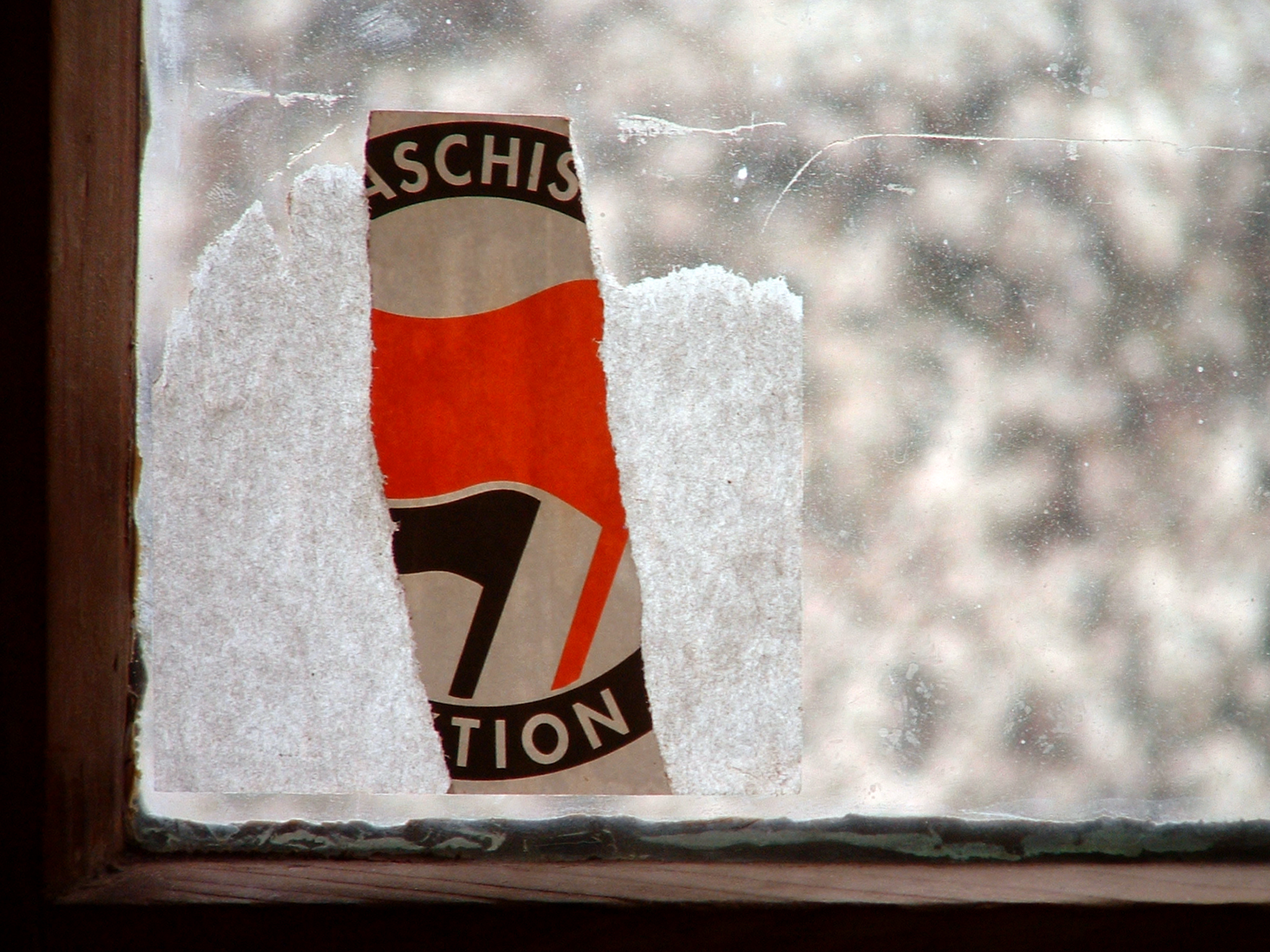
Over the years, the rise of the AfD has led to a dramatic, exponential increase in violence against migrants. At the same time, the response from German society has been very strong and, in some respects, is moving towards a polarisation that goes beyond the specific electoral issues of the German representative system and involves grassroots mobilisation by numerous anti-fascist organisations and movements that have their own very strong traditions and are engaging the younger generations. All is not lost, and fascism in Germany still faces a multitude of opponents. Turning to the left, the Linke itself has recovered from Sahra Wagenknecht’s split precisely because of the influx into the party of a great many young people who have reshaped the party’s agenda. Wagenknecht’s departure has, in part, enabled the Linke to adopt less accommodating positions towards Russia. Whilst the left also opposes rearmament and the reinstatement of compulsory military service, there is also the issue of defending against the Russian threat and supporting Ukraine’s resistance. Here, the differences with Italy are strikingly clear.
Speaking of the BSW, the German red-brown party does, in fact, take us back to Italy for a moment. It is 24 November 2024 when Sahra Wagenknecht is a guest at Nova, the constituent assembly of the Five Star Movement led by Giuseppe Conte. At the time, the German leader was opposed to an agreement with the AfD, but the agenda presented to the Italian audience echoed the same populist themes, ranging from attacks on European austerity to the refusal to help Ukraine against Russian aggression, right through to racist rhetoric: “There is migration that helps, but we have a shortage of flats, we have a shortage of teachers and nurseries; this harms the poorest of all,” said the BSW leader to the Five Star Movement assembly. Further tirades against ‘woke’ culture, ‘gender’ and vaccines made the German Stalinist the political point of reference for Giuseppe Conte, who (let us recall) is standing as a candidate to lead the centre-left alliance in the forthcoming general election.
Following her appearance in Italy, the BSW experienced a series of setbacks that directly involved Wagenknecht herself, who has also formally stepped down from the leadership of the party that bears her name. In the last federal elections, held in February 2025, the BSW spectacularly failed to enter parliament by a few thousand votes, falling short of the 5 per cent threshold. It currently remains stuck at 4 per cent in the polls and will have to deal with the issue of its collaboration with the AfD in Saxony-Anhalt – no small matter, which also risks causing the party to implode once and for all.
In conclusion, as we noted in the article on General Vannacci, when discussing the rise of the far right in Europe, one must look towards Moscow: it will become clear that the entire political agenda mirrors that of the Kremlin and that substantial funding often originates from there as well. A recent journalistic investigation has demonstrated the high level of Russian infiltration in Germany, not only through simple propaganda but also through acts of sabotage and hybrid warfare. The rise of the AfD is yet another example of this phenomenon, which is characterising these years of violent international crisis, alongside the climate crisis and the emergence of authoritarianism on a global scale.