
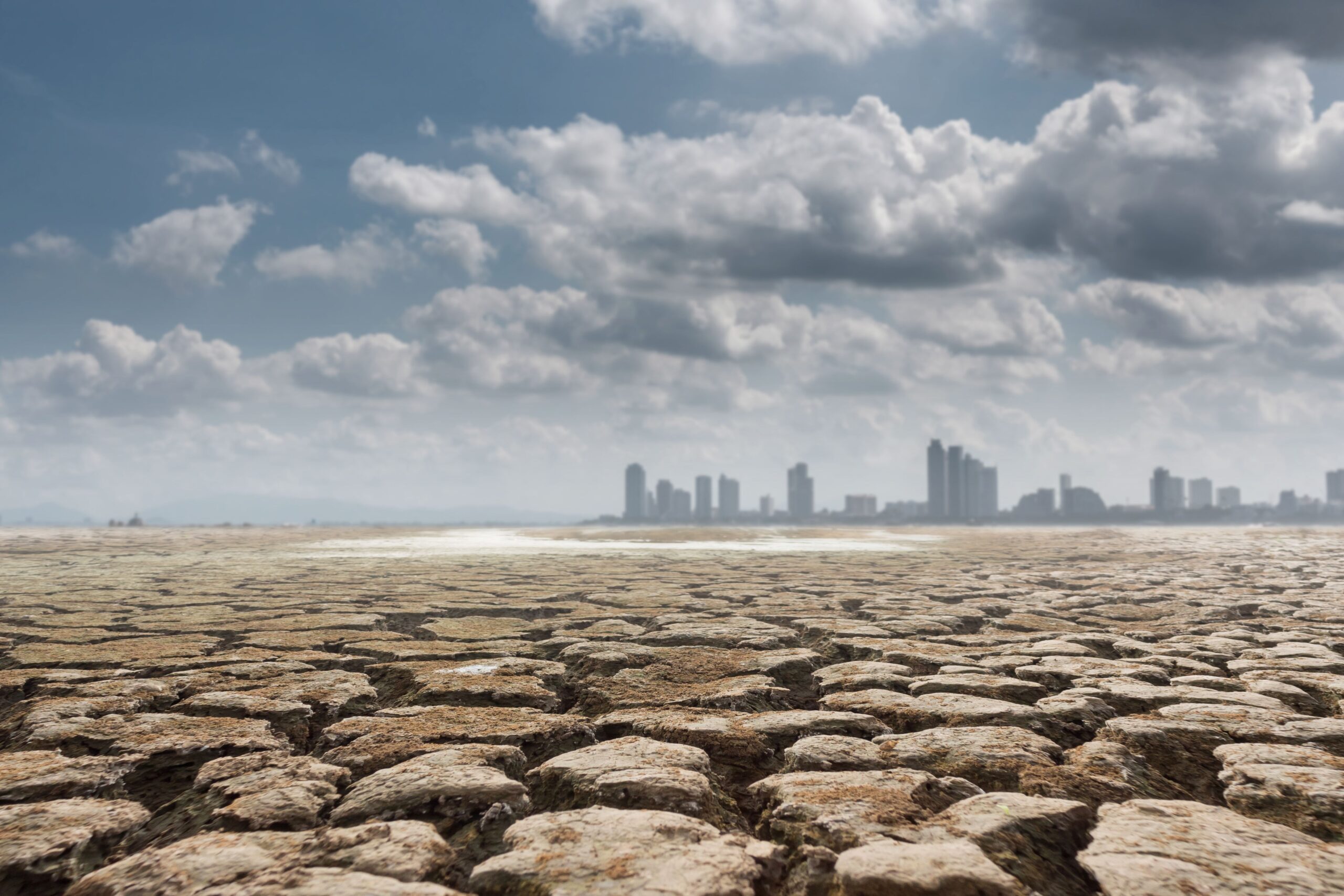
The issue of the climate crisis lies at the heart of current and future political debate: it concerns the habitability of the planet, the survival of our and other species, the collapse of biodiversity, and the breakdown of energy, industrial and political systems.
This crisis is currently being managed by grossly minimizing what is happening and, to a large extent, what has already happened .The modest targets set in the past to reduce pollution and limit temperature rises have been spectacularly missed.
Global elites are fully aware of what is happening and are attempting to safeguard their position of privilege by devising dystopian scenarios of isolation on pristine, well-protected, ultra-technological islands, whilst intensifying repression of the remaining population, who are destined to bear the brunt of climate related disasters. In this sense, the issue of migration control and border closures is being used to safeguard the concentration of wealth and power, seen as so-called climate migration will become increasingly frequent in the future. The rise in armed conflicts must also be viewed in the context of the search for raw materials and energy supplies, which are becoming increasingly unstable due to the consequences of the oil-based economic model.
The key issue for the near future will be to take action to combat climate change: even though almost nothing has been done to date, failing to act at all would amount to nothing short of the premature suicide of the human species. Given current regulatory standards and industrial policies, the collapse of energy systems is not a hypothesis but a certainty. This collapse, however, will not happen suddenly, but will be a continuous process punctuated by various and repeated crises. This process is already underway, and a key point to understand is that energy crises do not impoverish everyone equally; rather, their impact is concentrated primarily on the poorest sections of the population and, globally, in the Global South, where energy conservation is an emergency policy dictated by necessity.
Mature forest ecosystems are among the main regulators of the Earth’s major water cycles and energy balance. They once covered much larger areas, but have been progressively and severely degraded everywhere. The main cause of this devastation is the large-scale livestock farming industry. Greenhouse gas emissions, deforestation, land consumption, pollution, the spread of more resistant diseases due to the misuse of medicines (antibiotics), and viral epidemics such as avian flu: all of this is caused by the current regime of large-scale industrial livestock production. A possible way forward has been developed by movements such as the Plant Based Treaty, which envisages a gradual phasing out of this harmful system by replacing the current model of animal exploitation with a predominantly plant-based global diet. It is clear that such a change is not only complex but would need to be implemented by rethinking the current concentration of production and urbanisation, and by decentralising agricultural and settlement processes.
Another aspect of the fight against climate change concerns the feasibility of the so-called ‘green economy’ – the replacement of polluting energy production with renewable sources. Alternative energy sources are not always truly sustainable, because the technologies required for their operation often also involve the exploitative extraction of rare earths, frequently located in poor countries, which are subject to new forms of colonisation and exploitation. The current industrial system is unsustainable because it is inextricably linked to the concept of unlimited economic growth and the mandatory maximisation of private profits: in some respects, simply switching some of the energy raw materials is not enough to halt this process. Moreover, even the technological shift in production based on AI and the digital industry in general rests on an energy-intensive foundation that is just as devastating for the environment as that of traditional industry.
Furthermore, the necessary policies of austerity and reduced consumption in the Global North may have a negative impact in the Global South on countries that depend on access to foreign currency, international credit and export markets.
As regards the exponential growth of data centres, this expansion must be viewed within the context of the central role that AI and cloud computing have come to play in the global economy. Major industrial clusters are polarising into two camps: China is offering its ‘token diplomacy’ to neighbouring countries, which are thus becoming inextricably linked to Beijing’s economy, whilst the US is creating the ‘Pax Silica’ – that is, a secure supply chain for all the materials required for the development of AI. This race is driving a massive increase in the demand for data centres across the country, leading, as mentioned, to a series of protests and an inevitable debate over the sustainability of this model. The upcoming US election campaign is already centring on this issue, which is dividing political camps and public opinion. Naturally, Donald Trump is keen to see the completion of hundreds more data centres across the US, locating them in the country’s poorest suburbs.
The environmental impact of data centres is quite significant. Energy and water are required to power the servers and cool the equipment. This consumption becomes critical when situated in areas facing permanent water, agricultural and climate crises. Another factor is land use, as large swathes of land are taken away from necessary reforestation or from sustainable agricultural use – oriented, as mentioned, towards a plant-based transition in global food systems. The generator sets used to ensure the continuous operation of data centres are a further source of diesel consumption and heat production.
The development of data centres and artificial intelligence is closely linked to the major processes of concentrating power in the hands of a few, and the widespread surveillance of populations through the most widely used software and devices. A striking example is that of the Colossus 1 and Colossus 2 data centres built in Memphis by Elon Musk. These facilities, impressive even in name alone, have been criticised on various grounds, from the use of natural gas turbines to other ethical issues surrounding the development of artificial intelligence, Trump’s wars and contracts with the Pentagon. On the other hand, who better than Elon Musk to embody, in a single person, all these short circuits in the accumulation of power that are contributing to the worsening climate crisis?
This brings us to the concluding point of our argument, namely that the economic processes leading to environmental devastation are closely linked to that despotic shift we denounced in the founding manifesto of the Anti-Authoritarian Alliance. Countering the rise of authoritarianism will therefore be a task closely linked to the struggle for climate justice, leading to the immediate mitigation of climate change and global warming. This is a commitment that seems utterly daunting and insurmountable for all those forces that are currently being crushed by these great powers, which, in order to safeguard their own privileges, are prepared to plunge the entire planet into the abyss: nevertheless, we believe that this commitment is fundamental and necessary.