

 The war in Ukraine is entering a phase marked by yet another Russian terrorist operation against civilians. The continuous bombardment of drones over Kyiv and the strike on buses in Kramatorsk are yet further proof that Putin’s regime is prepared to do anything to advance its criminal purposes, even killing the Russian-speaking civilians of the Donbas whom it was supposed to protect from the so-called ‘neo-Nazi junta’. Yet this propensity for terrorism – which, sadly, has been evident for years now – is often denied or downplayed even on the left (starting with the Bucha massacre in 2022), in order to present a distorted picture in which the two sides in the conflict are portrayed as being on an equal footing. “Labelling Russia as a terrorist state is a point of no return, which pushes a political solution further away rather than bringing it closer: by doing so, the military option remains the only one on the table.” This is what Massimiliano Smeriglio, a Member of the European Parliament elected for the Democratic Party in 2019, said in November 2022, for example, to justify his vote against the European Parliament resolution which defined Russia as a state sponsor of terrorism. Two other MEPs from the Democratic Party, Pietro Bartolo and Andrea Cozzolino, voted against the resolution alongside him, as did the anti-vax MEP Francesca Donato.
The scenario we need to piece together to understand how we have got to this point may seem complex, but it is based on a number of points that are difficult to dispute. Several years ago, Russia planned a multi-pronged campaign to weaken Europe in various ways: alongside direct military intervention, it has deployed a series of propaganda operations, media manipulation, infiltration of public debate, sabotage and low- or medium-intensity military attacks to test the European response. What is known as ‘hybrid warfare’ is becoming increasingly overt and public. Smeriglio’s statements and vote make it clear just how deeply propaganda and cultural warfare have taken root in Europe, even within democratic circles; yet one need only look at the present day to see how much the Italian political debate is influenced by Russian fake news, including in the selection of the leader of the so-called ‘Campo largo’ (meaning something like “big-tent coalition”).
A crucial point, therefore, is to understand how all this Russian propaganda – built up over years of ‘troll factories’ and the recruitment of journalists, politicians and commentators in Europe – has found fertile ground (especially in Italy) and to what extent it has served to aid the war effort on the ground in Ukraine. The delegitimisation of the Ukrainian resistance has sparked a debate on military aid: whether and to what extent it should be substantial, whether it should be purely defensive or also offensive, and so on. In the face of Russia’s terrorist tactics, this debate seems increasingly surreal: it really does seem absurd to divide ourselves into pacifists and warmongers when cities – with their markets, hospitals, roads and bridges – are under attack, whilst in Oleshky some 1,700 people are living without electricity, water or heating. Military aid from European countries is coming under increasing criticism from both the right and the left, yet it has literally saved the lives of thousands of people. For example, thanks to the massive loan the EU is providing to Ukraine, several new models of high-speed interceptor drones – mostly made in Ukraine – are currently being developed or tested to shoot down the latest Russian Geran 4 and 5 jet-powered drones. Meanwhile, Kyiv is already equipping itself with robotic machine-gun turrets that appear to be able to stop some of these Russian drones.
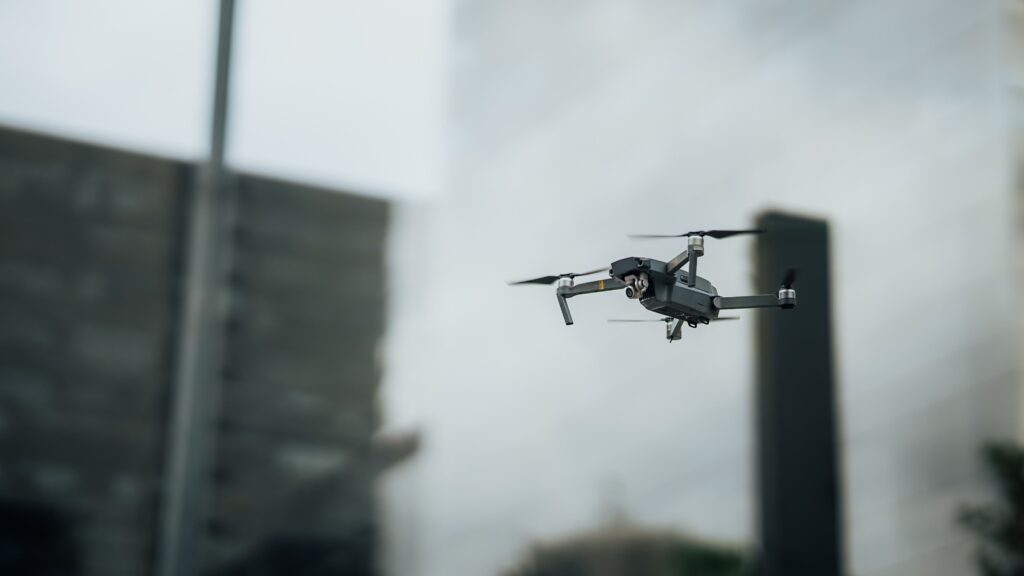
Another aspect of hybrid warfare, which is becoming increasingly prevalent, is that of sabotage operations and the incursions of Russian drones into various European countries. There have been explosions at munitions factories in Italy too, in Colleferro, near Rome, whilst the German government has denounced such drone incursions on several occasions. The Russian strategy has always been to deny these incursions, and infiltration of the Western media and public debate has bolstered this denial. The entire network of pro-Russian blogs and commentators has consistently attributed the various drone incursions to Ukraine, accusing NATO of provocation.
However, it is now becoming very difficult not to connect the dots between the factory explosions and other low-intensity military attacks. To draw a comparison with another ongoing conflict, the Russian strategy appears very similar to that of Iran, which, in order to strike at the US, attacks its Middle Eastern allies such as Kuwait, Jordan, Bahrain, etc.
Europe today could respond to any attacks of this kind – carried out using low-cost drones laden with explosives – only in the way it is already doing, namely by chasing them down with fighter jets, spending enormous sums and rapidly using up its ammunition, whilst Ukraine does so using home-made interceptor drones that blow the attacking aircraft out of the sky, at a much lower cost.
This brings us to the most sensitive point of the debate, at least within the radical left and the Italian ‘movement’: how should we respond to this clear Russian escalation? To date, we have witnessed two linked campaigns: the first sought to portray the West and NATO as the provocateurs, completely distorting reality to suit its own political convictions and the reassuring comfort zone that views the West’s enemies as the eternal victims of its imperialism. The second campaign, following on from the first, proposes a pacifist, anti-militarist and disarmament agenda exclusively for Western states, deliberately overlooking the BRICS countries, sometimes in the wake of the idea that every oppositional movement must deal with its own domestic imperialism: but this completely distorts reality, denying Russia’s imperial designs – a country that continues to produce almost twice as many weapons as it deploys in Ukraine thanks to its shift to a war economy – as well as the rearmament plans of its allied states, such as Serbia, or of countries at the top of the BRICS group, such as India, another country involved in a recent conflict and the fifth-largest spender on defence in the world in 2025, which last year increased its defence spending by 8.9 per cent.
Peace and disarmament are noble objectives, historically championed by all progressive and radical political forces. To be realistic, however, these objectives must be agreed upon and practised by all belligerent forces, and we should therefore demand them of everyone. If even a single imperialist power disarms, the consequences are easy to foresee: a particularly apt example is Ukraine itself, which in the 1990s, following its independence, dismantled its entire nuclear arsenal in exchange for a promise of peace with Moscow. How this unilateral disarmament turned out is plain for all to see.
In the debate on rearmament – whether amongst parliamentary left-wing parties or in collective assemblies – the contrast between military spending and social spending is regularly invoked. This implies treating public finances as a fixed total, such that increasing one item of expenditure inevitably means cutting others. This is the opposite of what the street protests against precarious work and in favour of a basic income – movements such as “San Precario” (in Italy a fictional patron saint created by a grassroots movement in defence of precarious workers) or Occupy – have been arguing for years: the funds to increase social spending must be drawn from general taxation, and tax revenue must be increased by taking money from where it abounds. From large investment income, from enormous profits, from the incomes of multimillionaires. Today, in Italy, it is mainly salaried workers who are taxed, and the highest tax bracket lumps together those earning just over 2,000 euros a month with those earning 5, 10 or 20 times that amount, whilst the largest companies are allowed countless loopholes to evade tax. A fairer tax system would make it possible to increase spending both to protect incomes, wages, healthcare and education, and to defend ourselves against aggressive and unscrupulous powers. Restoring substance to the slogan ‘tax the rich’ – reviving a struggle that has been all but abandoned by grassroots movements for over a decade – is urgent and should be the foundation of every other struggle.
We would therefore like to point out to the movements involved in the ‘Stop European Rearmament’ campaign that the situation is far from straightforward. It is clear that the militarisation and rearmament of states can lead to terrible consequences, such as increased internal repression, and can heighten the likelihood of wars spreading. However, we must not forget what is happening in Europe, and it is frankly unacceptable to deny or downplay Russian imperialist aggression simply because we are far from the front line – or feel that we are. In reality, the front line of Russian attacks is drawing ever closer. The situation is incredibly complicated, and perhaps to understand the full extent of the drama and the historical contradictions we face, we should listen to those who are most directly exposed to the danger – such as our Ukrainian feminist comrades, LGBTQ+ people, environmentalists, anti-authoritarians and all those who are literally fighting for their individual freedom, who have joined army battalions to combat the Russian invasion and terrorism.